
Phnom Penh:Every season brings its own challenges, but some demand greater preparation than others. Scientists are forecasting the arrival of El Niño, a climate phenomenon that often brings prolonged heat, less rainfall, drought, and an increased risk of wildfires. While we cannot change the weather, we can take practical steps to protect our health, our families, and our communities.
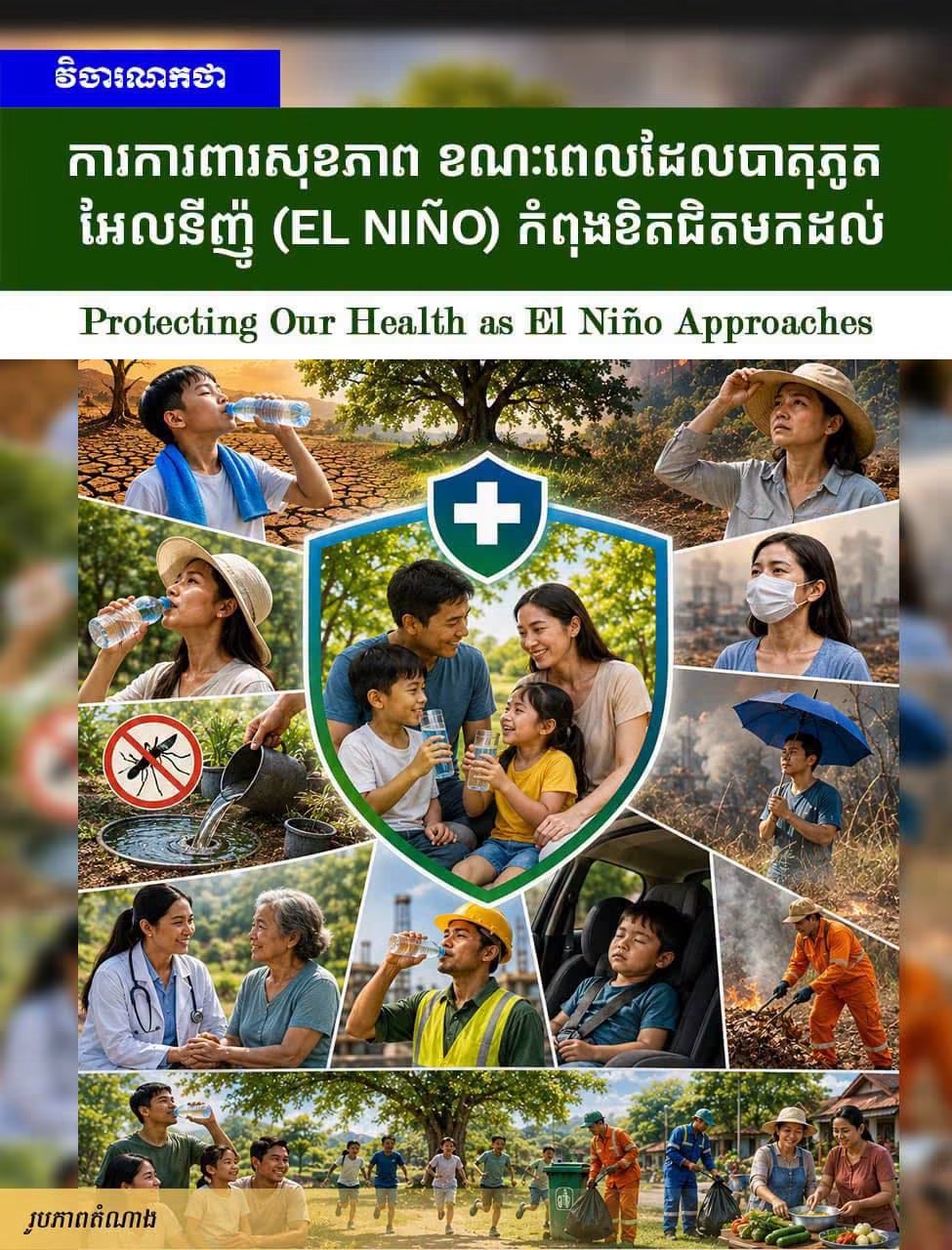
The first and most important measure is to protect ourselves from extreme heat. High temperatures place tremendous stress on the human body. Heat exhaustion and heat stroke can occur quickly, particularly among children, older persons, pregnant women, outdoor workers, and people with chronic illnesses. Drink plenty of clean water throughout the day—even before feeling thirsty. Wear light-colored, loose-fitting clothing, seek shade whenever possible, and avoid strenuous outdoor activities during the hottest hours, typically between late morning and mid-afternoon.
Hydration is essential. During hot weather, the body loses water rapidly through perspiration. Dehydration can cause dizziness, fatigue, headaches, confusion, and, in severe cases, life-threatening complications. Families should ensure that everyone, especially children and the elderly, drinks sufficient water regularly.
Food safety also becomes more important during periods of extreme heat. High temperatures allow bacteria to multiply more quickly. Fresh food should be cooked thoroughly, consumed promptly, and stored safely. Drinking water should come from clean and reliable sources. Good hand hygiene before preparing or eating food remains one of the simplest and most effective ways to prevent illness.
Air quality can deteriorate during El Niño due to dust and smoke from vegetation and forest fires. People should avoid burning waste or agricultural residues, as these activities increase air pollution and can trigger respiratory illnesses. Individuals with asthma, heart disease, or chronic lung conditions should limit outdoor exposure when the air is smoky or dusty and seek medical advice if symptoms worsen.
Communities must also eliminate standing water around homes. Although El Niño often brings drier conditions, occasional rainfall can leave stagnant water that becomes breeding grounds for mosquitoes. Empty containers, clean gutters, cover water storage containers, and keep surroundings clean to reduce the risk of mosquito-borne diseases.
Mental well-being deserves equal attention. Extended periods of heat can increase stress, fatigue, irritability, and anxiety. Families and communities should look after one another, especially those living alone, older neighbours, and vulnerable individuals. A simple visit, a phone call, or offering drinking water during a heatwave can make a meaningful difference.
People working outdoors—including farmers, construction workers, park rangers, and sanitation workers—should take regular breaks in shaded areas, drink water frequently, and adjust work schedules whenever possible to avoid the hottest parts of the day. Employers should prioritize the health and safety of their workers by providing drinking water, shaded rest areas, and flexible working hours during extreme heat.
Parents should ensure children are never left inside parked vehicles, even for a few minutes. Temperatures inside vehicles can rise rapidly, creating life-threatening conditions.
Health protection is not solely the responsibility of doctors and hospitals. It begins in every home and every community. By staying informed, practicing healthy habits, caring for one another, and protecting our environment, we reduce the health risks associated with El Niño.
Preparing for El Niño is ultimately about protecting life. Every glass of clean water we drink, every tree that provides shade, every fire we prevent, every healthy meal we prepare, and every neighbour we help contributes to a healthier, safer, and more resilient society.
Extreme weather may test our resilience, but it also reminds us of the strength of community.
When we prepare together, we protect not only ourselves but also those who need us most.
Good health is our greatest wealth. As El Niño approaches, let us make prevention, preparedness, and compassion our shared responsibility.
#Environment, #Nature, #Earth, #Eco, #GoGreen, #Sustainability, #ClimateChange, #ClimateAction, #GlobalWarming, #EnvironmentalAwareness